skip to main |
skip to sidebar
My father-in-law, Abram, passed away last month after 92 years of life.
Two weeks later my family took Mila his caretaker from Nepal for a day trip to Jerusalem (without me, I still cannot walk a whole day).
With my daughter and granddaughter.
His granddaughter on the right.
 Mila was with us for three years. She did her job splendidly, carefully, and with a warm heart. We are very thankful to her and wish her all the best. She will stay in Israel for another period of time and found work again with an elderly patient in the same neighborhood where she lived with my father-in-law.
Kol tuv Mila!
Photographed by Uri Eshkar and Marc Denner.
 Cotton is something we all love. We clothe in it, we sleep on it and under it, we enjoy it as tablecloth and pillows, and we love to dress our windows with it. Cotton provides comfort, is versatile and performs in many ways. It can be woven or knitted into a variety of different fabrics and it has a wide industrial use in the manufacturing of a large assortment of wares as well. Cotton is present even in some banknotes. Cotton is not only a fiber but also food. The cotton seeds are fed to cattle. They are also crushed to make oil for frying, baking and salad dressing.
A week ago we passed cotton fields on our way to Jerusalem and photographed the fluffy white gorgeous balls that occur when the flower matures. I showed you the beautiful cotton flowers two years ago in the month of July. The cotton blooms very briefly, after a short while the blossoms develop into pods which finally over a period of about three months ripen, then split open and reveal the cotton balls. The fields are left in the sun for more time to dry the balls and harvested before the rains start.
I picked a ball and felt the softness and the seeds in my hand. I was amazed how many hard little seeds were inside, I counted at least forty and I wondered how are they taken out? The process is called "cotton ginning", the fibers are cleaned from dirt and lint and the seeds are removed. Then the fiber can be spun into fine thread. From this all the wonderful goods labeled "100% Cotton" are created.
Photographs by Uri Eshkar.
I have some quilter friends and they give me their smallest scraps, because they know I enjoy transforming them into practical and beautiful things, like these pouches.
This time I picked all the reds and blues and adorned them with pretty yo-yos.
Some days ago my blogger friend Hilde from Norway posted photos of waterlilies with some interesting information, have a look here.
Yesterday we visited the Botanical Gardens in Jerusalem. There is a little artificial lake at the entrance and we spotted red waterlilies there. I wonder if they are one of a kind! :-)


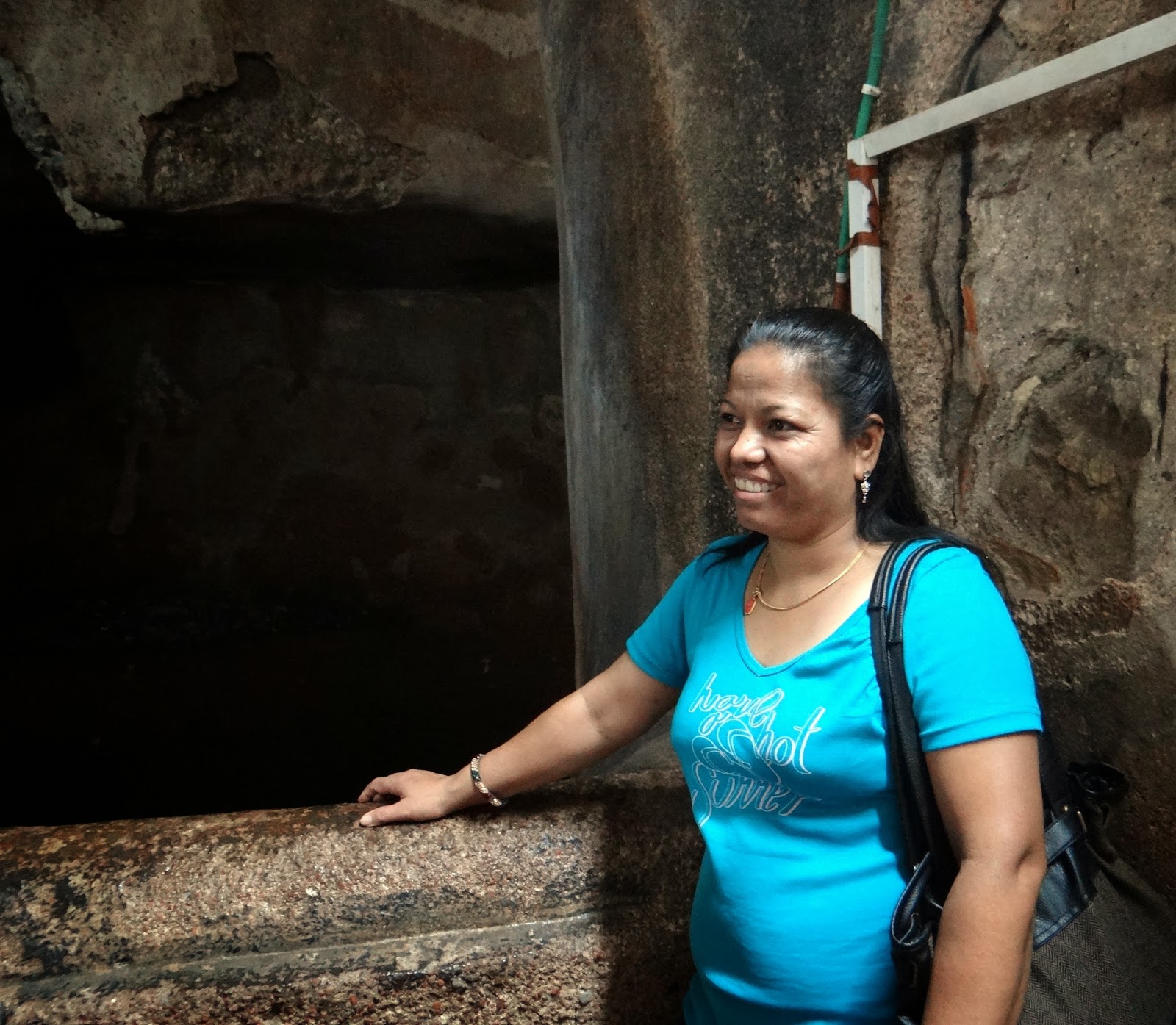 Mila was with us for three years. She did her job splendidly, carefully, and with a warm heart. We are very thankful to her and wish her all the best. She will stay in Israel for another period of time and found work again with an elderly patient in the same neighborhood where she lived with my father-in-law.


